
Why Your ‘Sinus Pressure’ Might Actually Be Facial Tension (And What to Do About It)
Marina Del Rey, Long Beach & Bakersfield Guide
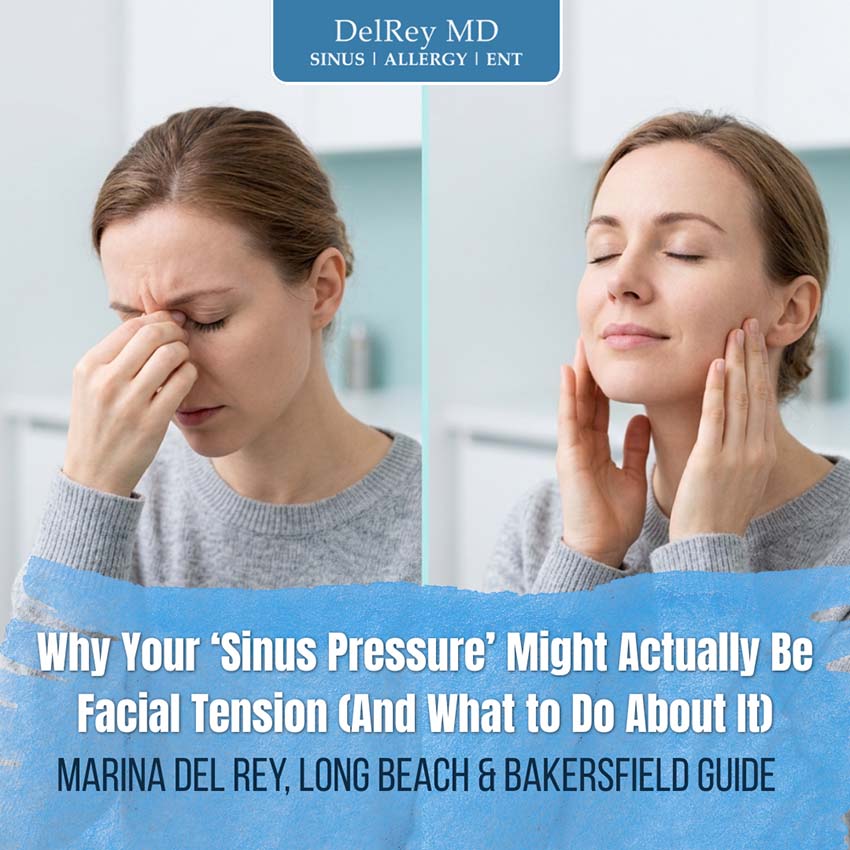
If you’re experiencing a heavy, painful feeling around your eyes, jaw, forehead, and cheeks, it’s easy to blame it on “sinus pressure” and point to sinusitis as the underlying cause. While this is possible, it’s not always the case.
In this article, let’s break down the difference between sinus pressure and facial tension, and how you can recognize when your “sinus pressure” in Marina Del Rey, Long Beach, and Bakersfield, CA, might actually be facial tension.
What Is a True Sinus Pressure?
Sinus pressure happens when the membranes and tissues lining the nasal passages get irritated, swollen, or inflamed due to the common cold, sinus infections, or allergies. When the sinus passages become inflamed, mucus can get trapped, preventing proper mucus flow and drainage. This can lead to sinus pressure.
Sinus pressure feels like a heavy tightness or ache in the face, particularly felt around the nose, eyes, forehead, or cheekbones. Sometimes, the pressure can also be felt in areas like your jaw, teeth, and even the scalp.
When we feel pressure or pain in the face, it’s easy to blame sinus pressure and sinusitis. However, this isn’t always the case. In some cases, that achy feeling in your face may be facial tension.
So, What Is Facial Tension?
Facial tension, to put it simply, is characterized by tight facial muscles, as well as aches and pain in the jaw, neck, and shoulders. It’s a common and natural occurrence in response to physical or emotional stress.
Facial tension can manifest in various ways, such as headaches, facial pain, jaw pain, and neck pain. If left untreated, it can lead to chronic pain and impact day-to-day life.
What are the common symptoms of facial tension?
Symptoms of facial tension vary per patient. Common symptoms it could manifest as may include:
- Tingling, pain, or discomfort in the face
- Jaw and neck pain
- Facial redness
- Headaches, which can be chronic or episodic
- Tension headaches
- Tightness in the face or neck
- Jaw clenching
- Eye strain or tension
- Diminished range of motion in the neck and jaw
- Teeth grinding, especially at night during sleep
What are the causes of facial tension?
There are several possible causes of facial tension, including:
- Stress and anxiety
Stress and anxiety may be one of many factors that cause facial tension. When we are constantly stressed or anxious, our muscles tend to tighten, leading to tension in the facial and neck muscles. - Poor posture
Poor posture, such as slouching or hunching, can put pressure on the muscles in the face or neck, especially if we spend so much time sitting, standing, or lying down with a poor posture. Teck neck, or neck and upper back discomfort from phone and computer use, may also be a driving factor. - Tension headaches
Tension headaches are the most common type of headache. They may feel like pressure on your forehead and temples, almost feeling like there is a tight band wrapped around your head. It can be episodic or chronic, and can cause tension and pain in the neck and shoulder muscles as well. - Digital fatigue
Spending too much time looking at digital devices for work, meetings, or leisure activities may lead to tension and pressure in the facial, neck, shoulder, and jaw muscles. - Physical trauma
Muscle overuse, trauma, or injury may also cause facial tension, especially if it happens in the face, jaw, neck, or shoulders. Accidents and falls may cause aches, pains, and tensions even later on in life. - TMJ (temporomandibular joint) disorders
The habit of clenching or grinding the teeth at night may put tension on the jaw and facial muscles, which might cause pain.TMJ (temporomandibular joint) disorder is a “catch-all” term for chronic jaw pain, and results when there is stress put on the face and neck muscles around the temporomandibular joint, which is the hinge that connects the jaw to the skull’s temporal bones.
Signs Your “Sinus Pressure” Might Actually Be Facial Tension
If you’re experiencing chronic pain in your facial muscles, it’s important to seek professional medical help. However, there are some signs that could tell you that the “sinus pressure” you’re experiencing might actually be facial tension:
- The pressure or tension gets worse when you’re feeling stressed or anxious
- Your jaw feels achy, tight, or sore
- You are prone to clenching or grinding your teeth
- The pressure or tension feels worse after prolonged screen time
- You can feel worse pain or tension after you wake up
6 Ways to How to Relieve Facial Tension in CA
-
Learn coping strategies to manage stress and anxiety
Stress and anxiety may be contributing factors to the pressure or tightness you feel in your face, neck, jaw, and shoulders. Adopt coping strategies that could help you manage stress and anxiety.Deep breathing exercises, meditation, massages, yoga, and mindfulness techniques may help you feel more relaxed, not just in your mind, but also in your body.
-
Try facial exercises
Facial exercises may potentially help strengthen the muscles in the face and may help promote overall facial health. Here are some simple facial exercises to help you get started:-
Smile as wide as you can, hold for five seconds, and then relax. Repeat this 10 times.
-
Raise your eyebrows as high as you can, hold for 15 seconds, and then relax. Repeat this three times.
-
Wrinkle your nose in a scrunch with your nostrils flared, hold for 15 seconds, and then relax. Repeat this three times.
-
-
Apply heat or cold therapy
You can apply heat to the affected areas to enhance blood circulation, or apply a cold compress or ice pack to the affected areas to reduce inflammation and numb the area.Both heat and cold therapy may be beneficial. Remember to use both cautiously.
-
Try massaging the muscles
Consider getting a massage from a qualified massage therapist to target specific areas in the face and neck to release pressure and tension.
-
Ask your doctor about Botox injections
Although Botox injections are commonly used in cosmetic procedures, they can also be used to combat muscle tightness and pressure. Ask your doctor about the possibility of this relief strategy. Keep in mind, however, results from Botox are temporary and will vary per patient.
When Should I Seek Medical Help for Facial Tension?
If you’re experiencing significant facial pain, pressure, or tension that starts to interfere with your daily activities, it may be time to seek professional medical help.
Seek urgent medical care for symptoms such as facial swelling, fever, vision changes, severe headache, chest pain, difficulty breathing, or rapidly worsening symptoms.
A doctor can help find out the underlying cause and discuss potential treatment plans to address your concern.
Distinguishing Between Sinus Pressure and Facial Tension in California
Del Rey MD provides ENT care services in Marina Del Rey, Long Beach, Bakersfield, and the nearby communities. Learn more about our clinic and the services we provide on our website.